Session 2: Senior Leadership Program: Work Culture
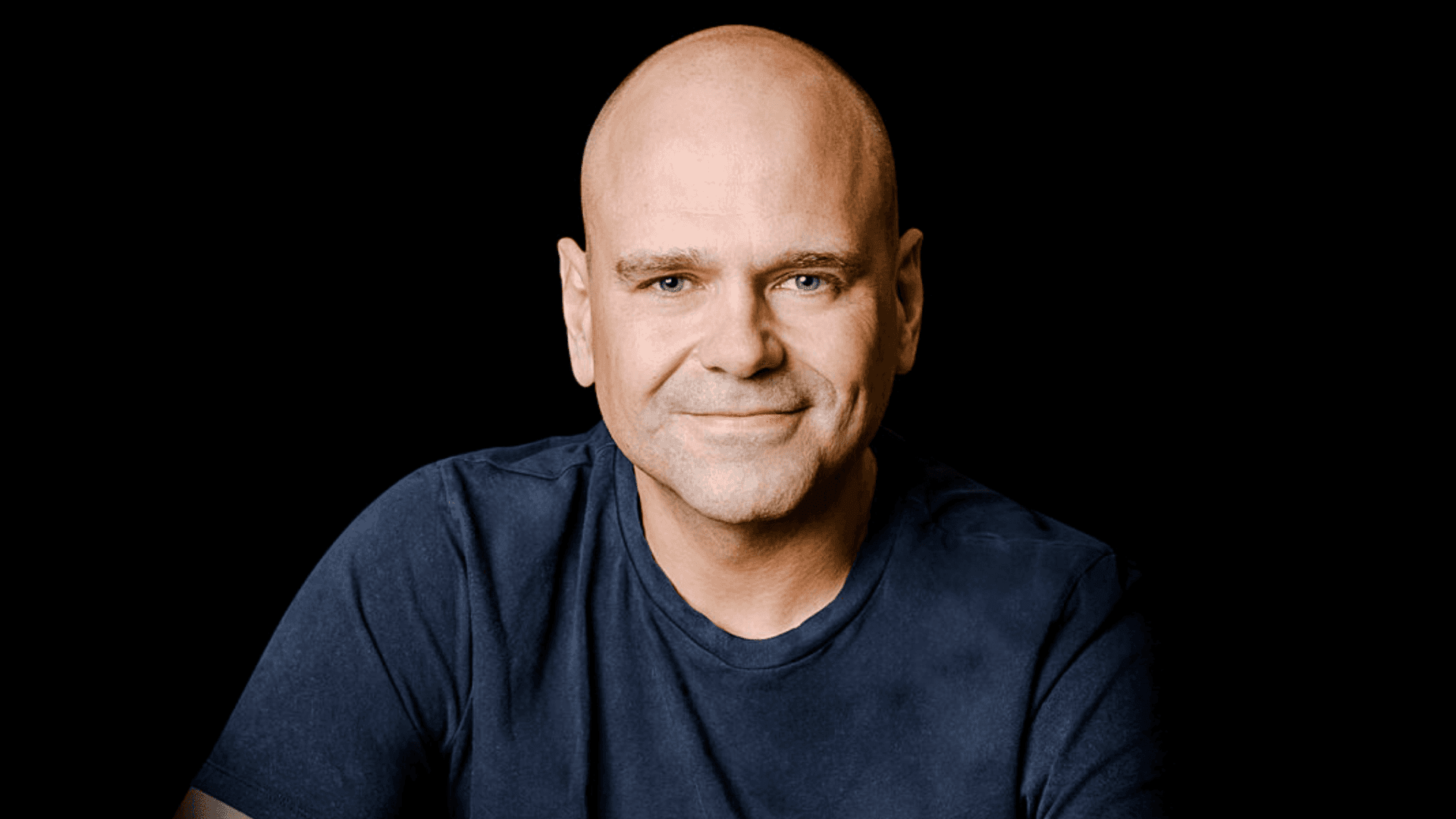
Cultivating a Winning Organisational Culture with John Spence


People
Leadership
Executive coach John Spence says when culture fails there is:
- slow execution
- silos and politics
- accountability gaps
- strategy dying in the middle
- low engagement
- high turnover
- poor customer experience.
Creating a winning organisational culture was the focus of session 2 of the Senior Leadership Program. Here's a summary of some of John's main points.
Culture = Cash
"As goes the leadership team, so goes the whole company." - John Spence
John says that the single biggest place a coach or leader can positively affect a company is a positive workplace culture.
It has an exponential impact on revenue, he says, and a bad/toxic culture (one of Adam Grant's 'deadly sins' of culture) is one of the surest ways to see a company go out of business.
"The customer's experience will never exceed the employee's experience. If you don't have a great culture it is impossible for them to deliver that to the end customer."
Employees not engaged
John says a Gallup survey of workers showed that:
- 31% of employees were engaged ("Rowing like they want to win," says John, using a rowing analogy)
- 52% of workers are not engaged ("Oars dragging in the water")
- 17% of workers are actively disengaged ("They're not rowing, they're drilling holes in the boat," he laughed).
He says that shows that 69% of employees don't really care if the company succeeds or fails. They're along for the ride, and this is dangerous for business.
So, what exactly is culture?
The definition of culture is: An organisation is the collective set of values, beliefs and behaviours that shape how employees interact, make decisions, and achieve goals.
It serves as the invisible framework that guides actions and unifies the workforce, directly impacting performance, employee engagement and long-term success.
When values are clear, decisions are easy
John says that culture should be by design, not by default. Have you carefully designed the culture in your organisation?
- Action step: What are the stated values of your organisation?
- What are the five words that describe the culture of your organisation? (what actually happens)
John says culture should be by design, not by default.
Some should reflect standards that are non-negotiable.
The Culture Framework
What do you tolerate? What do you refuse to tolerate?
"Whatever you tolerate you get more of," says John.
As well as S.B.A. (safety, belonging and appreciation), John says a healthy culture depends on:
Trustworthy Leadership
Embody the cultural values you wish to see. Ensure you display the 4 Cs of trust: Competence, Character, Consistency, Connection.
Symbol management builds trust (a symbol could be picking up rubbish in the carpark, returning emails in a reasonable time, not being on your phone in a meeting)
What is the noble purpose of your organisation?
John told a story about a U.S. manufacturing company making gearbox components for Black Hawk helicopters.
One day a general addressed the staff, telling them how the helicopters were being used in Iraq, and asking them, as the gearbox manufacturers, to bring “my boys back home safely.”
All of a sudden the employees understood their purpose – to keep American troops safe.
Similarly, a prosthetic leg manufacturer takes customers around the building to meet staff before they walk out with their purchase.
Action step: What is the noble purpose of your organisation? (John Spence's own noble purpose is: To help companies to be more successful).
Action step : Ask yourself, "What can I do to connect people in my company emotionally to our noble purpose?"
Belonging and Connection
- Every person feels valued
- Every voice is respected
- People can contribute ideas safely
- Different perspectives are welcomed
- Connection strengthens teamwork (icebreakers can be cheesy but knowing about people's hobbies or families does help to build personal connections)
(John also mentioned Project Aristotle at Google).
Empowered Collaboration
Daniel Pink talks about autonomy, mastery and purpose as being important for motivation. John says autonomy needs clarity to be truly effective.
Growth and Development
A culture of lifelong learning is where everyone in the organisation is trying to help each other get better.
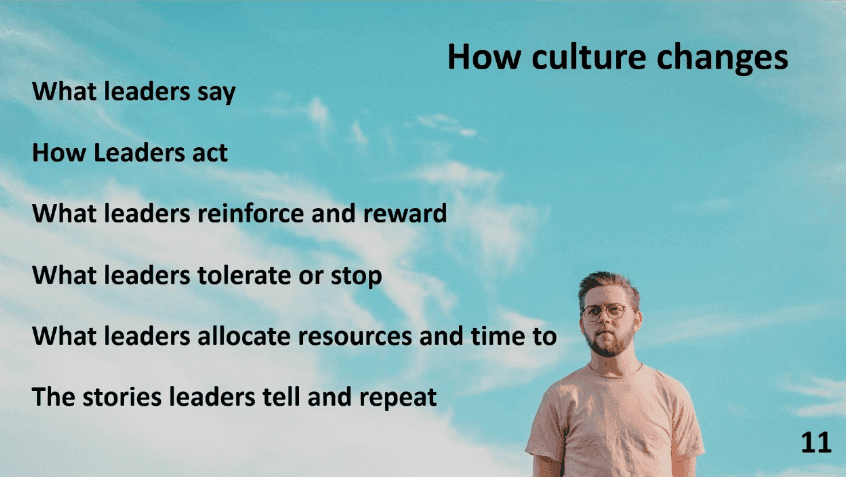
One action step
Participant suggestions on ways they would go forward to improve their culture included: Book club, talking to their team about purpose, striving to be more of an active listener, reinstating daily team musters, reducing negative team discussions, share their learnings, and not tolerating apathy towards other people's time.
Here are some suggested action steps you could take:
- Do you have a written list of values that you refer to when you make major decisions? What are the values of your company?
- What are your personal core values (that define you)?
- Look at your company/personal values. On a scale of 1 to 10 (10 = we live the values, 1 = we have a poster on the wall) do your behaviours match the values, how well do you live the values in your company/in your life?
- What negative behaviours that don't align with your values do you tolerate? What do you refuse to tolerate (that you're proud of)?
John Spence
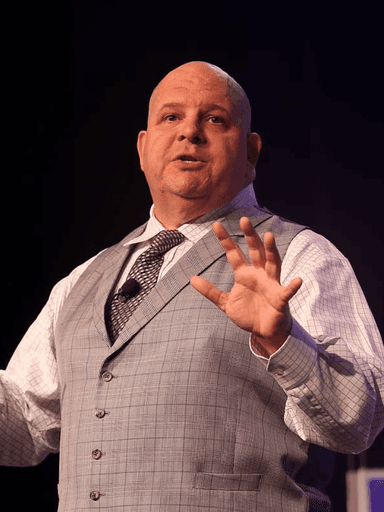
John Spence is recognised as one of the top leadership development experts in the world. In 2023 he was named in the Top 50 Global Thought Leaders and Influencers for both Coaching and Culture (Thinkers360) and was once named one of America’s Top 50 Leaders to Watch by the American Management Association alongside Sergey Brin and Larry Page of Google and Jeff Bezos of Amazon.
John consults to and coaches organisations at all levels on advanced leadership, high-performance teams, strategic thinking, business excellence and superior customer service. John has guest lectured at more than 90 colleges and universities, including MIT, Stanford, Cornell, and the Wharton School of Business.
John has also been the owner or CEO of five companies and currently serves as a board member or adviser to several organisations. He is the author of “Awesomely Simple: Essential Business Strategies for Turning Ideas into Action.”
Let’s talk about:
- Foundations of business excellence
- Strategy that works
- Characteristics of outstanding leadership
Upcoming Learning
Who's Up Next?We're continually sourcing the world's greatest minds for your business success, so subscribe today for event updates, business ideas, leadership tips and tools for growth.
Related Articles