Stephen Covey Masterclass: Leading at the speed of trust
Bestselling author Stephen Covey's message that trust is an economic driver of business
Jump to sectionThe trusted personThe distrusted personTrust is an economic driverTrust is the #1 leadership competencyTrust is a learnable skill:
Leadership
People
Stephen M.R. Covey says trust is the new currency of our time.
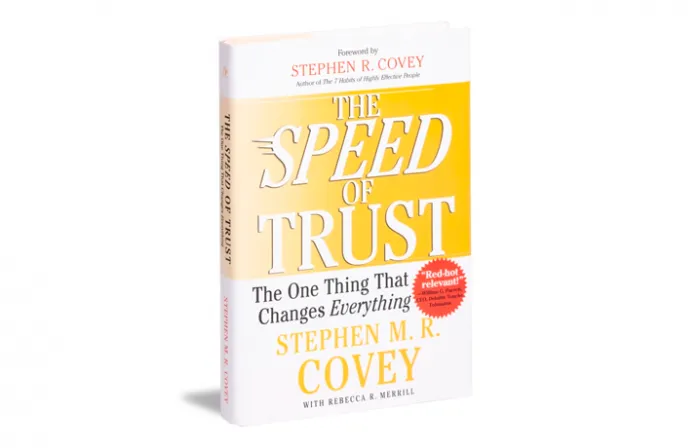
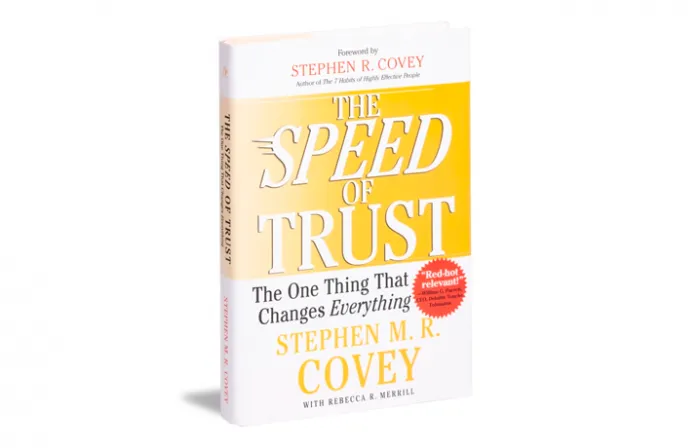
The global speaker and New York Times and #1 Wall Street Journal bestselling author of The Speed of Trust says if you build the trust, your ability to grow goes up.
Its always mattered, but it matters even more today in a low trust world, he says. Distrust is contagious. Thankfully, so is trust.
The trusted person
Identify a person you have a high level of trust with at work:
- What's it like to work with them? It's reassuring, safe, exciting, encouraging, open. What's the communication like? Its honest, simple, clear, and open.
- How fast can you get things done? Super-fast, quickly.
- What type of results do you get? Optimal, solid, efficient, awesome, effective.
The distrusted person
Identify a second person, this time one with whom you have a low trust relationship.
It's exhausting, frustrating, fake, difficult, boring, stressful, demotivating.
Communication is draining, guarded, exhausting, bitter.
Results are hit and miss, mixed, not reliable, not great, slow, or average.
Trust is an economic driver
As you can see from above, trust affects speed and cost.
Steven says that when trust goes down, the speed will go down and the cost will go up.
Its a tax!
He says when the trust goes up the speed goes up with it, and the cost comes down. That is a dividend.
High trust organisations have been shown to outperform low trust organisations by more than 280% (on total return to shareholders).
Steven says high trust offers a multiplier of 3x performance.
Trust is the #1 leadership competency
Today's leaders must be agile and develop high-performing teams that are : inclusive, collaborative, innovative, engaged, says Steven.
Without trust people don't collaborate, they just co-ordinate.
Trust, on the other hand, is transformative. Those who trust are 30% more likely to take a risk and 11% more likely to innovate.
And, employees who trust their managers are 14x more likely to be fully engaged (ADP Research Institute 2020 global study). As Steven says, when trust goes up, so does energy and joy.
Trust is a learnable skill:
Trust begins with yourself (self-trust) then ripples out to relationship trust, organisational trust, market trust, and societal trust.
Steven says the first step is always to look in the mirror. You build trust from the inside-out.
Think of a tree as the framework: The roots and trunk are character. The visible canopy is competence.
Sub-framework: The 4 cores of credibility
From the roots of the tree to the top of its canopy are four core tenets of credibility:
Integrity - honesty, truthfulness, doing the right thing (even if it costs you).
Intent - genuine caring and seeking mutual benefit. Assume positive intent in others.
Capability - growing, learning, getting better, staying relevant.
Results - when people see a track record, there is trust.
Without trust you are not really a team, Stephen says. It is trust that turns a group of individuals into a team.
13 behaviours of high-trust leaders
The saying goes: "To err is human and to blame it on someone else shows management potential!" Joking aside, says Steven, high-trust leaders exhibit many of these 13 behaviours:
Character behaviours:
- Talk straight
- Demonstrate respect
- Create transparency
- Right wrongs
- Show loyalty
Competence behaviours:
- Deliver results
- Get better
- Confront reality
- Clarify expectations
- Practice accountability
Character and Competence behaviours:
- Listen first
- Keep commitments
- Extend trust
Stephen says to start by choosing three behaviours to work on.
You can also take the list to others and ask them to choose three behaviours you could work on, or discuss the list as a team. What can we work on to increase team trust?
Summary
Stephen Covey says his father had a great expression "You can't talk your way out of a problem that you behaved your way into."
However, if you are keen to restore trust in a situation, Stephen says you can behave your way out of a problem you behaved your way into.
Take responsibility, he says. Own it. Write the wrong. It might include an apology or restitution. Tell people what you are going to do to rebuild or regain the trust. Clarify your expectations on what you will do. Do what you said you were going to do.
1. Start With Self - Work on your own credibility and behaviour.
2. Declare Your Intent -Don't assume people know your intent to trust them, and assume positive intent of others.
3. Lead Out - Extend trust to others before you expect trust in return.
When we extend trust to other people we give them a chance, says Stephen. We need more chances in life.
While it takes two people to trust, it only takes one to start.
Upcoming Learning
Who's Up Next?We're continually sourcing the world's greatest minds for your business success, so subscribe today for event updates, business ideas, leadership tips and tools for growth.
Related Articles