Reinvent Your Business Model in the Age of AI
Insights and actions from Alex Osterwalder's masterclass


Jump to sectionFull articleYour next stepsSee Alex Osterwalder live in-personGrowth Faculty membership
Strategy
Innovation
Full article
Have you stress tested your business model against all the disruption from AI?
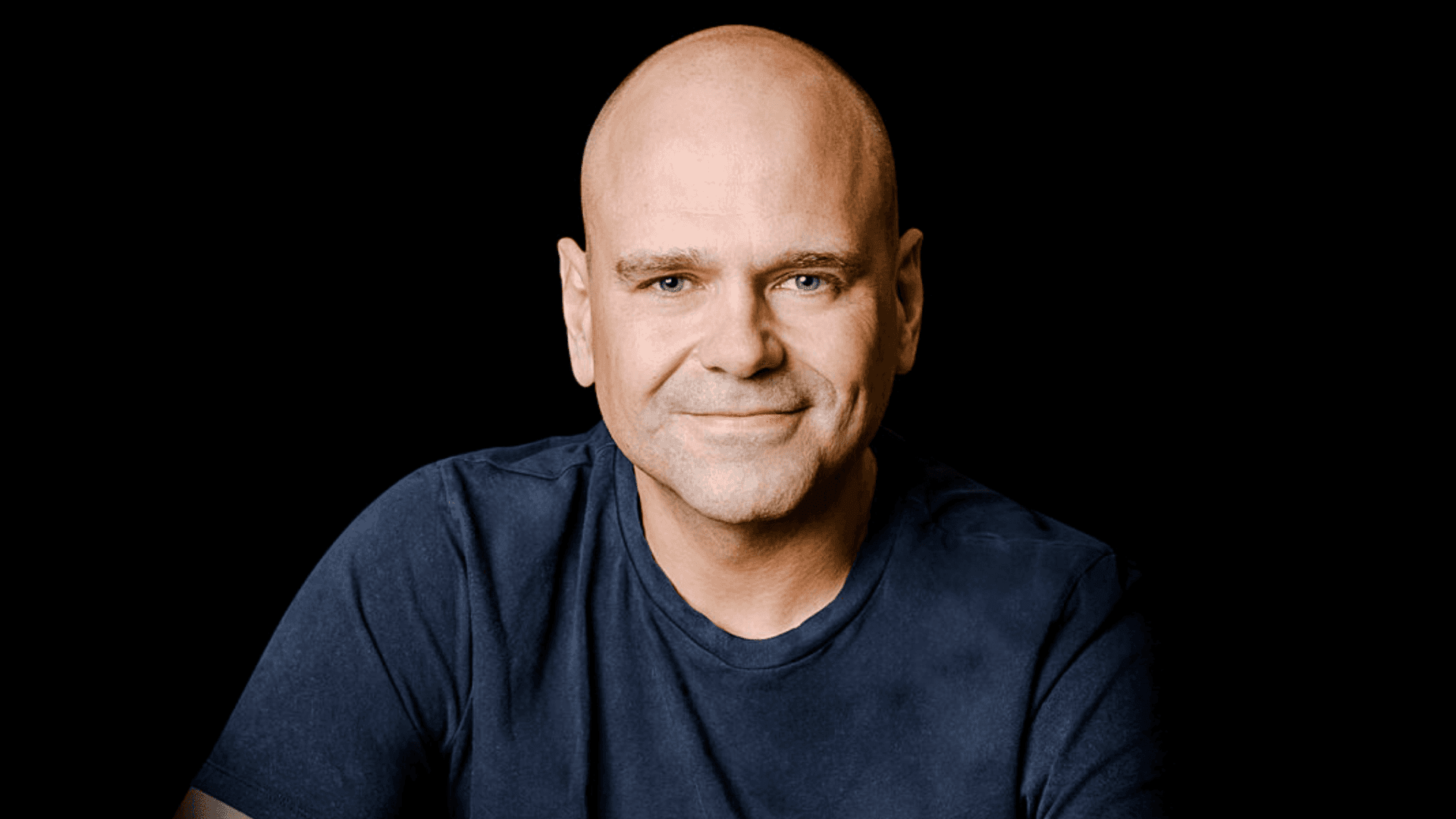
Alex Osterwalder, creator of the Business Model Canvas, joined us live this week from Switzerland and got us thinking differently about customers, pricing and the way we invest in the future.
Here are the highlights of his masterclass, along with actions for your team.
Two sides to every CEO
Alex told the masterclass that business models now expire faster than ever. Their lifespan has dropped from around 15 years to around five.
To keep up, leaders need to be managerial CEOs who run today's business well and entrepreneurial CEOs who reinvent it for tomorrow, both at once.
Four questions to stress test your business model
Alex shared a teaser from his AI vulnerability assessment, built around the four parts of the Business Model Canvas:
- Value proposition: How will you create value for customers in an age of AI and autonomous systems?
- Front stage: When AI agents do the buying, will you still have access to your customers?
- Backstage: Can your operations and infrastructure serve you well over the next five to ten years?
- Profit formula: How will you earn money when agents do much of the work?
Who owns your customer?
Alex invited us to picture a personal AI assistant, such as Meta's Muse, searching the web and making purchases for millions of people. If agents shop on our behalf, businesses may find themselves selling to agents instead of humans. Whoever becomes the "App Store of the agentic economy" could own the customer relationship, much as Apple and Google do for apps today.
He also noted that research shows people already trust their AI assistant over human advice, including advice from salespeople. An agent has no emotions and compares your product against online reviews with ease, so quality matters more than ever.
Pricing for outcomes
When software supports human work, charging per “seat” makes sense. When agents do the work, outcome-based pricing becomes the natural fit. Alex pointed to Intercom's Fin.ai, which charges $1 for each support ticket the AI resolves and charges nothing when a human has to step in.
Data as a competitive edge
Honeywell's Forge platform shows what happens when decades of domain expertise meet constant data collection. Its agents now help operate things like lighting, energy, and security systems in buildings, and that data gives Honeywell an advantage competitors will find hard to match.
Alex's question for every leader: how could your value proposition be more data-fuelled?
Explore and exploit: two ways of leading
Alex encouraged us to separate two kinds of work.
- Exploit is running the existing business, where you know your customers, products and supply chain. Forecasts can be accurate, and the right questions are "Are we on plan?" and "Are we on budget?"
- Explore is building the future, where uncertainty is high. The right questions are "What did we learn?", "Do customers have this need?" and "Do we pivot or kill the project?"
On business cases, Alex has this to say:
"Business cases are the death penalty of innovation."
His reasoning is that nobody has been in the future, so a business case is a spreadsheet of assumptions until real evidence arrives. He suggests making small bets, testing quickly, doubling down on what the evidence supports and being willing to end projects that stall. Sunk cost thinking is one of the biggest hurdles to agility.
Lessons from Ping An
Ping An, a traditional financial conglomerate, ran a portfolio of new ideas alongside its core business and invested around 1% of revenue and 10% of profit in exploration.
Some experiments, such as OneConnect and Ping An Good Doctor, grew into major businesses.
Others, such as a second-hand car platform, were wound down, and the team kept the learning.
For smaller companies the same logic applies at a smaller scale. Alex suggests investing in around three projects to find one winner.
Do the homework, then let AI amplify it
Alex's final example showed how the quality of AI output depends on the quality of your thinking. His team used four tools to build a strong value proposition:
- Customer profile: a deep understanding of who you serve
- Value stack: a map of how you create tangible value, tested with evidence
- Strategy canvas: a view of how you differ from alternatives
- Buying decision map: evidence that customers are willing to pay
Good context produces better results when you then ask your LLM (e.g. ChatGPT or Claude) to assess your business strategy.
Advantage of small business
Alex believes smaller, leader-driven companies can move more easily than large ones, because large organisations tend to resist anything new. His suggestions:
- Give your team room to experiment
- Hire an AI native, even if it is one person in a team of ten
- Remember that the cost and risk of doing nothing is larger than the cost of experimenting
"Give your teams the opportunity to experiment a lot," he told the masterclass.
Your next steps
Alex offered two actions you can take tomorrow morning.
- Use your LLM as a strategy sparring partner. In Alex's words: "Make a business model canvas, throw it into whatever LLM you use, and ask it to stress test your business model."
- Send an AI agent into your favourite software. Ask it to complete tasks a person would normally do, and watch how it works. Alex promises you will be impressed.
To build on these, try this short list in your next leadership meeting:
- Rate how strongly you own your customer relationship today and how it would hold up if agents did the buying
- Identify one service where outcome-based pricing could work
- Choose one small experiment and set a date to review what you learned
- Name who on your team could lead AI experiments
See Alex Osterwalder live in-person
If you’re keen to go deeper and learn more from Alex, join him on 17 November in Melbourne for a full-day Strategyzer-designed and delivered workshop on how to position your business for growth and resilience in this AI age.
Growth Faculty membership
All Growth Faculty virtual masterclasses are available to members as part of an annual membership. Enterprise packages available.
Download our program or scroll down for a quick overview of what's on.
Upcoming Learning
Who's Up Next?We're continually sourcing the world's greatest minds for your business success, so subscribe today for event updates, business ideas, leadership tips and tools for growth.
Related Articles