3 Patrick Lencioni frameworks for a high-performing team
Summary of Pat Lencioni's session on building high performing teams


Jump to sectionOrganisations Must Be Healthy as Well as SmartIdeal Team Player 6 Types of Working Genius5 Dysfunctions of a Team Learning with Growth Faculty
People
Leadership
Organisations Must Be Healthy as Well as Smart
Two requirements are needed to build high performing teams. They need to be:
· Smart (Strategy, Marketing, Finance, Technology)
· Healthy (Minimal politics, minimal confusion, high morale, high productivity, low turnover)
Yet the smart often overshadows the healthy, says organisational health expert Patrick Lencioni.
At his 2.5 hour session this week on building high performing teams, Pat outlined the competitive advantage of healthy organisations and The Table Group's 3 frameworks that can get you there.
3 Key Frameworks
They are:
· Ideal Team Player (Get the right people on the bus)
· 6 Types of Working Genius (Get them in the right seats)
· 5 Dysfunctions of a Team (Get the team to perform)
Read on for a brief description of each.

Ideal Team Player
Pat kicked off with the term “get the right people on the bus.”
Coined by Jim Collins, author of “Good to Great,” this term simply means having the right people join your team.
As Jim will explain in his upcoming live virtual session The Roadmap to Greatness on June 4, your best "strategy" when facing chaos and uncertainty is to have a busload of people who can adapt to and perform brilliantly no matter what comes next.
Pat Lencioni says his experience and research shows the ideal team player for most team "buses" is:
· Humble – thinking about yourself less, thinking of others (this is the most important virtue, says Pat).
· Hungry – a strong work ethic, goes a little further, likes to get work done but is not a workaholic
· Smart – emotionally intelligent, interpersonally smart, knows how their actions affect others
One trait team members
· Only humble? They’re a pawn with little efficacy
· Only hungry? They’re a bulldozer; braggy and may make the numbers but cost the business
· Only smart? They’re a charmer; you don’t want them unless it’s only to make you laugh
Two trait team members
· Humble and hungry? They’re an accidental mess maker. You have to clean up after them
· Humble and smart? They’re a loveable slacker. They do what’s asked or slightly less
· Hungry and smart? They’re a skillful politician. They interview well but are driven by ambition and can lose you staff
Tips to develop current team members
Pat recommends leaders rank themselves in each category, share with their team, help team members identify and acknowledge their area for improvement (constantly remind them)
Tips to hire for Hungry, Humble, Smart
· Stop focusing on technical skills over behavioural/attitudinal skills
· Improve interviewing by conducting non-traditional interviews (take them for breakfast), and by asking questions more than once
· Scare with sincerity – describe the work culture (“hungry is a core value”) and tell them they won’t enjoy working with you unless they share that value
6 Types of Working Genius
With your ideal team players on board, you need to ensure they are in the key roles that are right for them.
Enter Pat Lencioni’s 6 Types of Working Genius assessment (Go to workinggenius.com and use code GROWTH25 to get 20% off until March 11).
First, let's look at each genius type and the corresponding natural gift it's likely you possess.
- Wonder - you see potential.
- Invention - you see ideas.
- Discernment - you assess ideas.
- Galvanizing - you rally others to act on ideas.
- Enablement - you help to bring ideas to life.
- Tenacity - you push ideas to completion.
(Note, I've paraphrased The Table Group's descriptions. More details of each type is in our article 6 Types of Working Genius: Leadership tool from Patrick Lencioni).
Each person has 2 areas of “working genius,” 2 areas of competency, and 2 areas of frustration. Areas of working genius give people energy, areas of working frustration drain their energy.
Pat Lencioni told the masterclass that his time as a former employee in the “best job in America” with Bain & Company was the “worst job” for him. That’s because his role never let him air his areas of working genius:
· Invention – seeing ideas, coming up with better ways to do things
· Discernment – assessing ideas, seeing patterns
Geniuses at Work
Ideally you have a mix of each type of genius on your team. Teams should complete the assessment then create a team map listing names of team members under each genius type.
Every genius type is valuable to a team. Wonder and Invention are great for ideation. Discernment and Galvanizing are great for activation, and Enablement and Tenacity are great for implementation.
You could also say that Wonder, Discernment, and Enablement are responsive traits, whereas Invention, Galvanizing, and Tenacity are disruptive traits.
5 Dysfunctions of a Team
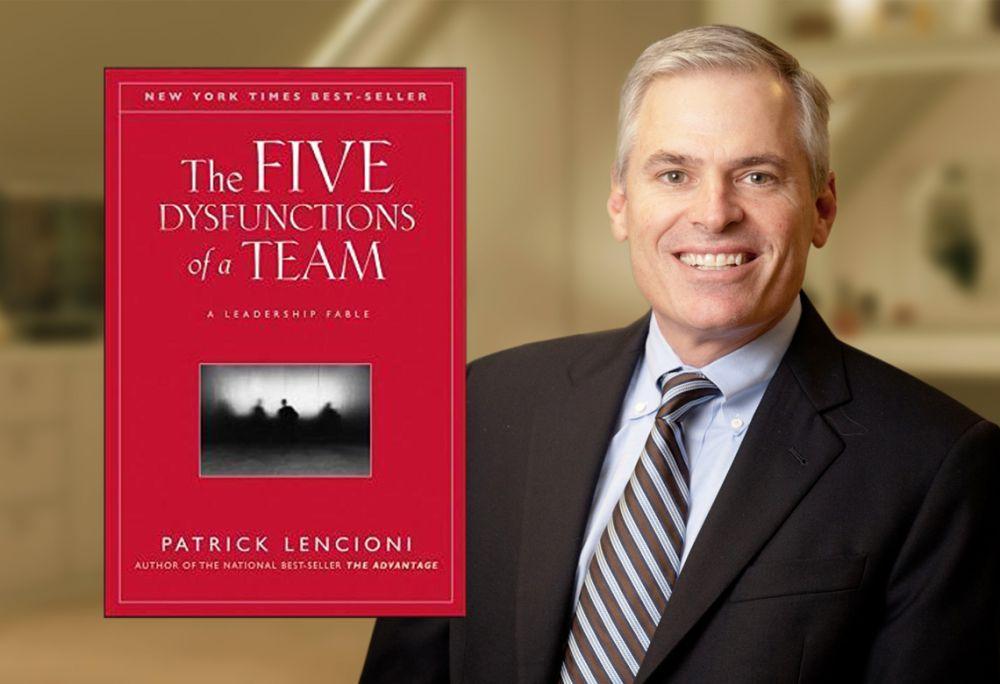
The 5 dysfunctions of a team can't be approached in random order. Each dysfunction must be solved in correct order to enable other dysfunctions to also be solved. For this reason, Patrick Lencioni orders the five dysfunctions into a pyramid, with TRUST as the pyramid base.
Once trust is established, teams can feel comfortable engaging in healthy conflict. Once they can argue effectively, they can commit to decisions being made. Once they've committed to decisions, they can be held accountable by their peers. Only once they're held accountable can attention be paid to results.

Learning with Growth Faculty
Want to keep up with the latest ideas and thinking from the brightest minds in the world?
Download our blockbuster 2025 Program! Growth Faculty’s live virtual learning sessions feature some of the world's most influential thought leaders in business and leadership, many of them focusing on AI, change leadership, and adaptable leadership.
Events are added regularly, so keep up to date by signing up for our newsletter and see what’s on offer for Growth Faculty members.
Growth Faculty also offers a great value Enterprise plan for larger companies to develop leadership skills in teams of 20 or more employees.
Images: The Table Group

Patrick Lencioni
12x bestselling author
Patrick Lencioni is the pioneer of the organisational health movement and one of the world’s foremost experts on leadership and teamwork. As an author, speaker, consultant and CEO of the Table Group, Pat has spent the last 20 years shaping the organisational health movement by helping leaders develop cohesive teams and engaged employees. Clients have included EY, Google, Microsoft, Hilton, Cisco Systems, Gartner, the NBA and NFL.
He is the author of 13 books, which have sold over 8 million copies and been translated into more than 30 languages. Prior to founding the firm in 1997, Pat worked at Bain & Company, Oracle Corporation and Sybase. Pat lives in the Bay Area with his wife and four boys.
Upcoming Learning
Who's Up Next?We're continually sourcing the world's greatest minds for your business success, so subscribe today for event updates, business ideas, leadership tips and tools for growth.
Related Articles