Leaders Take Note: Why Mattering Matters at Work
A recap of Zach Mercurio's Growth Faculty masterclass


Jump to sectionA leadership mistakeWhat mattering Is - and what it isn'tThe dataNoticed, affirmed, neededWhy we don’t show people how they matter
Leadership
People
A leadership mistake
One common mistake leaders make is valuing people after they perform - a pay rise, a perk, a recognition award.
The psychology runs the other way. People need to consistently feel valued before they consistently add value.
"It is almost impossible for anything to matter to a human being who doesn't first believe that they matter."
Organisational psychologist Zach Mercurio knows about “mattering” and has authored The Power of Mattering: How Leaders Can Create a Culture of Significance.
Read on for highlights of his leadership development masterclass The Power of Mattering on Growth Faculty this week.
What mattering Is - and what it isn't
Mattering is one of three important components of a successful culture:
- Belonging is being picked for the team (feeling welcomed and accepted by a group).
- Inclusion is being invited to play (taking an equitable role within that group).
- Mattering is feeling the team would not be complete without you (feeling valued and knowing how you add value).
When you matter, you have the key elements for sustainable performance: self-esteem (I am worthy) and self-efficacy (I am capable).
The more someone feels valued, the more they add value. The more they add value, the more they see their value. That's the upward spiral a mattering culture creates.
The data
Despite companies throwing money at engagement programs, Gallup's 2025 research shows disengagement is at its lowest point in a decade:
- Only 39% of employees strongly agree that someone at work cares for them as a person
- Only 30% strongly agree that someone sees and invests in their unique potential
Both have seen their steepest decline since 2020 - down 14% and 12% respectively.
Average time spent in meetings has nearly tripled since 2020, yet loneliness has increased. Quantity of interactions is not the issue. Quality is.
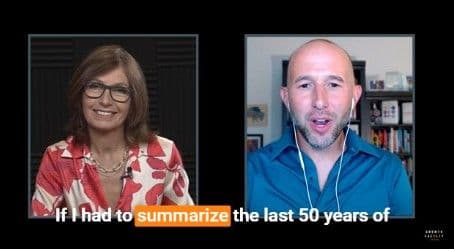
Image: Zach Mercurio's masterclass is available as a limited-time replay for Growth Faculty members.
Noticed, affirmed, needed
Zach Mercurio organises the path to mattering around three experiences:
· Feeling noticed
· Feeling affirmed
· Feeling needed
All three are available in any interaction with staff members. For emerging leaders, building these habits early can pay enormous dividends for team culture and performance.
1. Noticing
Noticing is the deliberate act of paying attention to the details and ebbs and flows of someone's life and acting on what you observe. It is different from knowing someone. You can know a team member well and still miss that they're struggling or disengaged.
Four practices of great noticers:
- Observe, note, and share. Zach shared the story of a manufacturing leader who kept a simple notebook. Each Friday she wrote one thing she wanted to remember about each team member (a piece of equipment that needed fixing, a holiday they'd mentioned, a meeting they'd been nervous about). Every Monday she scheduled a three-minute check-in based on those notes. Her team was the standout on engagement across the entire facility. Her explanation: "There is magic in being remembered."
- Ask better questions. A good question has a clear object and a timeframe. Instead of "How are you?" try "What has your attention this morning?" or "What were you working on five minutes before we connected?" Questions should also be exploratory rather than evaluative. Evaluative questions ("Are you going to get that done by Friday?") invite self-protective answers. Exploratory questions give the power back: "What's getting in the way of that deadline that I might be able to help remove?"
- Check in on energy. A simple green/yellow/red energy check-in can lead to better conversations.
- Practise compassion. Empathy is understanding what someone is going through. Compassion is offering an action to alleviate it.
Weekly reflection question: Who do I need to notice more, and what can I do to help them feel more seen?
2. Affirming
Affirmation is showing someone how their specific gifts make a specific difference. "Good leaders tell people that they matter. Great leaders show people exactly how they matter."
Name people's unique gifts. Four gifts every person brings: their strengths (what they love and are good at), their purpose (the impact that's missed when they're gone), their perspective (how only they see the world), and their wisdom (what only they have learned). We can believe we matter on our own, but it takes others to show us how. As Zach says, you can't read the label when you're inside the jar.
Show people the evidence of their impact. A National Parks supervisor whose team had transformed in morale had a Friday ritual: an email to his team with the subject line "Look what you did" - 50 photos of bridges repaired, bathrooms fixed, families using trails. He didn’t add body copy either, just images. His reasoning: "My people can't question whether they matter to me. I give them photographic evidence."
Give gratitude with specificity:
Generic praise doesn't go far. Human beings have an inherent need for uniqueness. When thanking someone, include the SBGI model:
- Setting - when and where it happened
- Behaviour - what you specifically observed
- Gifts - the qualities the person demonstrated
- Impact - the difference it made
Put a face to the task. Before assigning work, show people who it serves. Adam Grant's hospital study changed one handwashing sign from "Hand hygiene prevents you from catching diseases" to "Hand hygiene prevents patients from catching diseases." The result: 33% more soap used, 10% more handwashing per clinician per hour. Compliance is doing something because someone else wants it. Commitment is doing something because you want to. Showing people why a task matters converts one into the other.
Weekly reflection question: Who needs to be shown the difference they make, and how can I show them?
3. Showing Team Members They Are Needed
In 1913, agricultural engineer Max Ringelmann had individuals and groups pull on a rope and measured the total force. Individuals almost always exerted more than groups because they know their effort (and theirs alone) is indispensable. When people feel replaceable, they act replaceable. When they feel irreplaceable, they act irreplaceable.
Connect work to a bigger purpose
Write it as an "if it wasn't for you" statement - if it wasn't for you, this wouldn't have happened -and say it.
Weekly reflection question: Who needs to be reminded that they are needed?
Why we don’t show people how they matter
Zach identifies why we don’t show people how they matter:
- Skill decay. Digital communication has reduced our practice of seeing, hearing and affirming others in real time. A social skill can decay within eight days of not using it.
- Overconfidence bias. Labelling these as "soft skills" makes us think we're already doing them well. The data says otherwise.
- Attention fragmentation. Our ability to focus without distraction has dropped to only about 47 seconds. "Hurry and care cannot coexist."
Where to start
"Always assume that the people we serve feel unseen, unheard, and undervalued - and act accordingly." - Zach Mercurio
Schedule your good intentions. When you think of someone you should check in on or thank, put it in your calendar. Don't leave it to chance.
At the end of each week, ask three questions:
- Who do I need to notice more?
- Who needs to be shown the difference they make?
- Who needs to be reminded that they are needed?
Most importantly, understand that your next great leadership act is your next interaction. Make it matter.
Upcoming Learning
Who's Up Next?We're continually sourcing the world's greatest minds for your business success, so subscribe today for event updates, business ideas, leadership tips and tools for growth.
Related Articles