PUT YOUR GROWTH ABOVE YOUR EGO SAYS ADAM GRANT TO BUSINESS CROWD
WONDER DOWN UNDER - 5000 AT ADAM GRANTS FIRST OZ TOUR
Jump to sectionMore takeaways from Adam Grant LIVE in Australia
Leadership
People
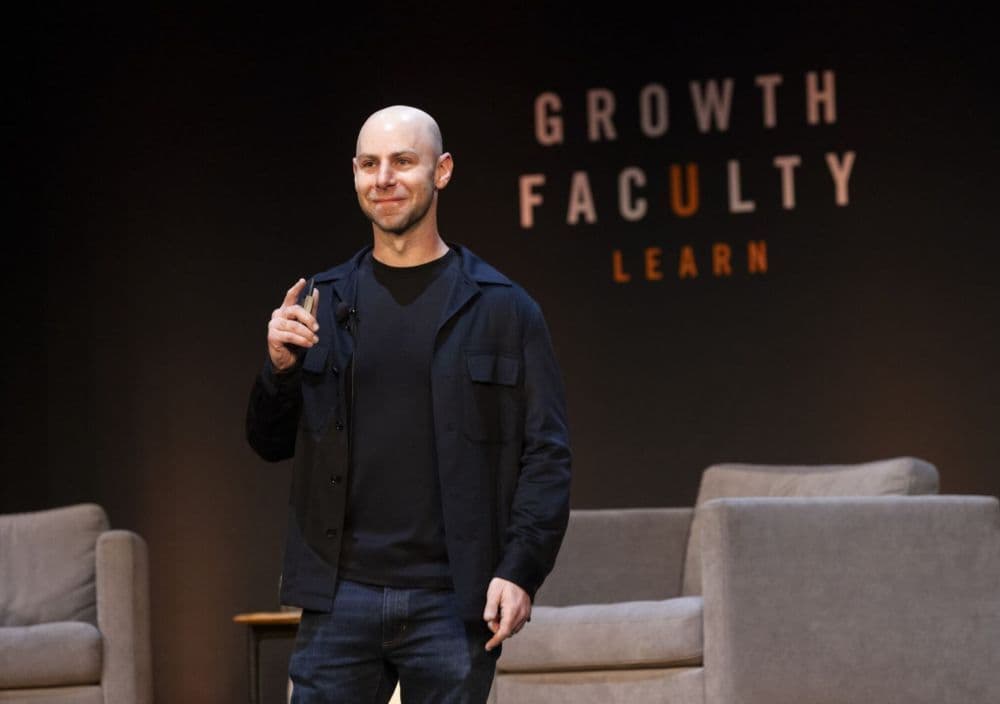
We all have hidden potential - we just need to put our growth above our egos. This was a theme of Adam Grant's first ever Australian speaking events, hosted by Growth Faculty.
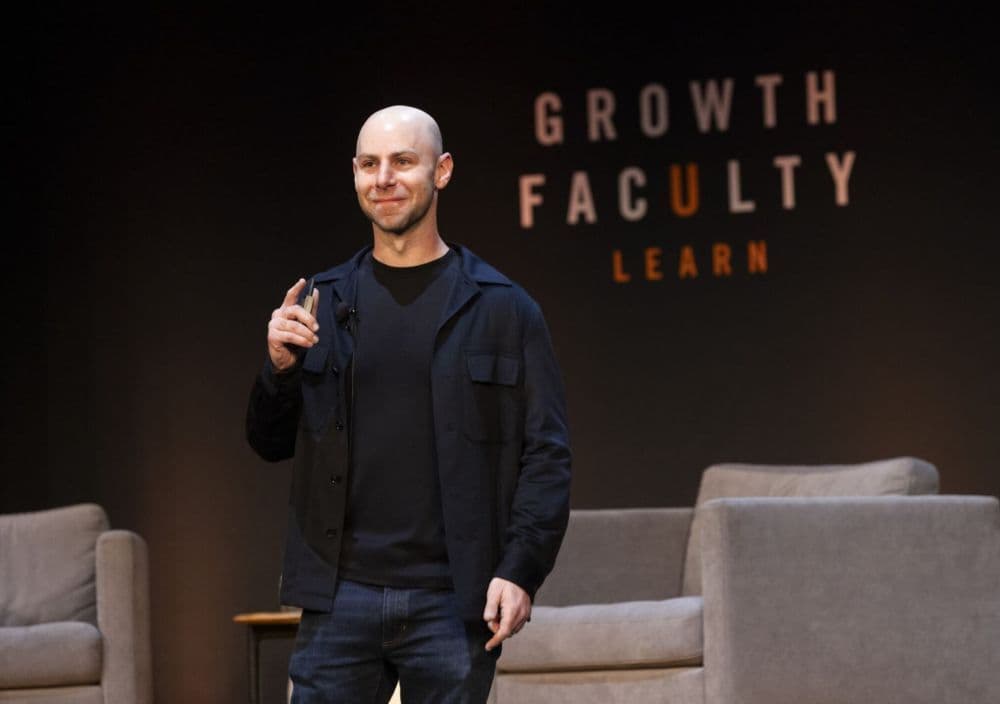
Wharton's top-rated professor wowed the crowds totalling more than 5000, as he took to the stage in Melbourne and in Sydney. The Sydney event was livestreamed exclusively for Growth Faculty members.
"I think everyone has hidden potential, but it might be invisible to you or the people around you," said Grant, whose insights as an organisational psychologist place him #2 in the top management thinkers in the world.
Ego, imposter syndrome, tuning out feedback from critics, not getting truthful feedback, and underestimating introverts are just some of the ways our potential remains hidden.
Unlocking this hidden potential requires rethinking like a scientist, says Adam.
FREE WHITEPAPER (email required): Business Case for a Strong Work Culture
Ahead of our follow-up live, virtual panel discussion Reset Your Workplace Culture 2024 on March 12 (led by Culture Institute CEO Karl Treacher), here are our takeaways from Adam Grant LIVE:
Put Growth Over Ego
Carol Dweck's book Mindset outlined the importance of a growth mindset. Yet often we choose to feed our ego instead of using feedback to grow.
Grant says being reactive and ego-driven short-circuits learning. Theres the temptation to tune out negative feedback, he says.
"Learning is more likely when people are reactive and growth oriented, and the sweet spot is when people are proactive and growth oriented. They consistently take the initiative to expand themselves and adapt," he says in his latest book Hidden Potential.
Turn Critics Into Coaches
Ask for advice, not feedback.
"Feedback is backward looking," says Adam Grant. It leads people to criticise you or cheer for you.
Its often couched in a compliment sandwich, says Grant. Better known as a s#*t sandwich, the compliment sandwich is heard by the receiver as:
- Obligatory compliment
- CRITICISM OF WHO I AM AS A PERSON
- Obligatory compliment
Advice is forward-looking, it leads people to coach you.
How do you get people to coach you? Ask for advice, says Grant. He says you can get your critics and cheerleaders to act more like coaches by asking a simple question: "What's one thing I can do better next time?"
Show that you can handle the truth
As you get more power you get less negative feedback. People have issues with speaking truth to power. So, model the behaviour of showing you can improve.
If you get a D- score, show that you are willing to take the tough feedback, and aim to get an A+ on how well you respond to the poor score.
Tell people "Here are the things I'm bad at that I'm trying to improve upon."
As Grant says, he makes a point of letting people know he takes his job seriously but he doesn't take himself very seriously.
The people you work with closely know what you are bad at, so you may as well take the credit for pointing it out and showing self-awareness.
Find the Diamonds in the Rough
We often recognise potential in other people who are doing well, but we underestimate those who are becoming better.
For this reason, Grant likes examples where organisations offer job interview candidates the opportunity for a do-over.
At the end of a job interview the applicant is asked how they thought they did. If they're not satisfied, they are offered a second chance.
It's not how great you are on your first interview, but how well you learn, grow, adapt, and flex, explains Grant.
Build a Culture of Givers
A culture of givers significantly outperforms a culture of takers. Why? Everybody in the culture of givers is happy to share their knowledge, provide mentoring, and help solve problems, says Grant, so the organisation can innovate more and fix mistakes , which translates empirically to better profits, higher productivity.
Grant has some great ideas around managing conflict at work, but he told the audience that to reduce conflict it's important to weed out the takers.
It's nice to have the right people on your team, but it's imperative to get the wrong people off your team, he said.
He adds that someone who expresses "Deep down I think people are fundamentally selfish" is probably selfish themselves.
A Reciprocity Ring
Proactive generosity is relatively rare in busy workplaces. Grant says that 75% to 90% of helping behaviours start with a request for help. The problem is a lot of us don't ask for help.
If nobody asks, nobody gives, says Adam. He suggested the audience try crowdsourcing by forming a reciprocity ring. Gather people and have each of them make a request around a want or need. Challenge the others to find the solution to that want/need.
When everyone makes a request, givers start asking and takers start giving, he said.
Communicate Your Vision
Using a clapping experiment (try to guess a song that someone else plays out by clapping) Adam Grant showed what happens when people try to present a new idea or a fresh vision.
They have the song (or vision) in their head, and it confuses them why it doesn't make perfect sense to others. "People can't rise to the occasion if they don't know where they're headed," says Adam.
If you overcommunicate your vision you are helping people to see it, he says. If you undercommunicate they don't know what they're doing or they don't care.

More takeaways from Adam Grant LIVE in Australia
Normalise Failure
Grant says unlocking our hidden potential is not so much about celebrating failure as normalising failure.
When you launch a project it is a good idea to come up with "kill signals." This is when it is time to stop the project.
Referencing the work of Harvard professor Amy Edmondson and her work on psychologically safe workplaces, Grant said organisations should show that they value that call-out to stop a failing project.
Adam Grant also shared that he asks people he trusts to give his work a score from zero to 10.
"I look for an aspirational score, not a good enough score. I need an 8 to move on."
Perfectionism vs. your best
A self-confessed perfectionist , Adam Grant shared how his diving coach Eric Best told him that a score of 10 in diving was not, in fact, for perfection, but for excellence.
"I was a perfectionist; I wanted every dive to be perfect. Now Im aiming for better not perfect."
Like languishing (the topic of Grants viral op-ed in the The New York Times in 2021), perfectionism holds people back from unlocking their potential. Teenager Adam didnt feel confident he could execute difficult dives.
"I thought I needed to build the confidence to take the leap. But I realised I needed to take the leap to build the confidence," Adam told the audience.
As his coach asked him, If this is something you want to do one day, then what are you waiting for?
Rethink Imposter Syndrome
Grant says a lot of people view imposter syndrome like its a debilitating chronic disease. So, he prefers the term imposter thoughts.
These are pangs of doubts: Am I ready? Are other people overestimating me?
The more often you have these thoughts the better you perform. You have more persistence and you become a better learner, says Adam Grant.
Adam's recommended podcasts:
- Invisibilia especially the episode How to Become Batman
- Dax Shepard's Armchair Expert
- Malcolm Gladwell's Revisionist History
- Brené Brown's Unlocking Us
- Hard Fork by Kevin Roose and Casey Newton
Adam's leader role models who unlock potential:
- Indra Nooyi, former CEO and Chair of PepsiCo
- Admiral William H. McRaven, author of Make Your Bed
Conversation starter questions:
Do we normalise failure in our organisation? How do we ensure people are not afraid to fail here?
Does our team comprise any takers? Can we build a reciprocity ring so that givers do more asking for help and takers do more giving?
Who in our team might be overlooked for having hidden potential? Does our hiring process weed out too many candidates with potential in favour of those with experience?
Do I, as an individual, put my growth over my ego?
What will I do differently having heard Adam Grant's presentation?
Book our Good to Great Immersion Workshop with Jim Collins
If you enjoyed global thought leader Adam Grant, know that CEOs and executive teams have the opportunity to learn direct from Jim Collins , at a rare and invaluable Good to Great Immersion Workshop with Jim Collins in October 2024.
As was experienced at the successful 2023 event, this year's (2024) full-day event will again see Jim Collins himself taking CEOs and executive teams through the characteristics of Level 5 leadership essential for taking a company from good to great and his roadmap for applying his famous concepts.
Jim's global bestseller Good to Great: Why Some Companies Make the Leap... and Others Don't is one of most cited and successful management books of all time.
Follow-up Panel Discussion on Workplace Culture
Save March 12 in your calendar and join in our interactive virtual panel discussion on the challenges for work culture in 2024.
Reset Your Workplace Culture for 2024 is a follow-up to Adam Grant's events and will touch on themes explored in Adam's talk.
Culture Institute CEO Karl Treacher will lead a panel of experts - Carlo Tarquinio (Group Brand & Innovation Director, Reece Group), Nina Azzopardi (Head of People & Culture, Beyond Blue) and Katrina Blair (CFO, Tennis Australia ) for a conversation moderated by CEO of The Executive Connection (TEC) Stephanie Christopher.
Links:
Future of Work: Insights from Organisational Psychologist Adam Grant
Reimagining WorkLife: How Adam Grant Rethinks Work
Our Favourite Adam Grant Quotes on Potential, Perfectionism, and Procrastination
Why 'WorkLife' Adam Grant's take on psychological safety is timely for Australia
Adam Grant: How to master the leadership skill of rethinking
Adam Grants Ideas for Managing Conflict in the Workplace
Adam Grants 4 Deadly Sins of Work Culture
7 top tips from Adam Grant to boost your motivation in 2024

Adam Grant
As an organizational psychologist, Adam Grant rethinks how we work and live. He has been Wharton’s top-rated professor for 7 straight years, and his research has inspired people to question assumptions about leadership, success, character, culture, and change. He is the #1 New York Times bestselling author of 6 books that have sold millions of copies; been praised by Oprah, Mark Cuban, Malcolm Gladwell, Daniel Kahneman, Lin-Manuel Miranda, Trevor Noah, Serena Williams, and Reese Witherspoon; been translated into 45 languages; and been named among the year’s best by Amazon, Apple, the Financial Times, and the Wall Street Journal.
Upcoming Learning
Who's Up Next?We're continually sourcing the world's greatest minds for your business success, so subscribe today for event updates, business ideas, leadership tips and tools for growth.
Related Articles