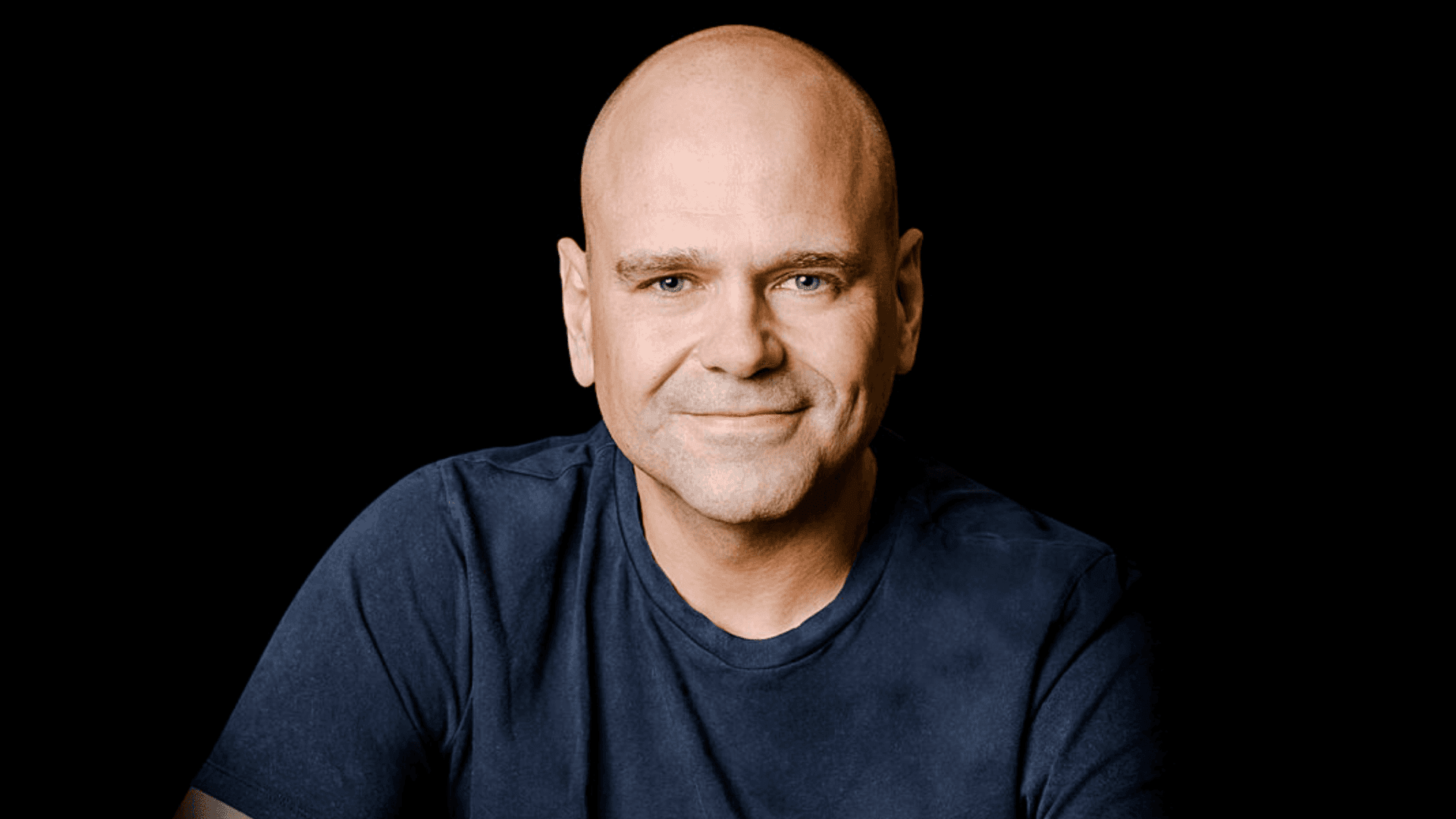
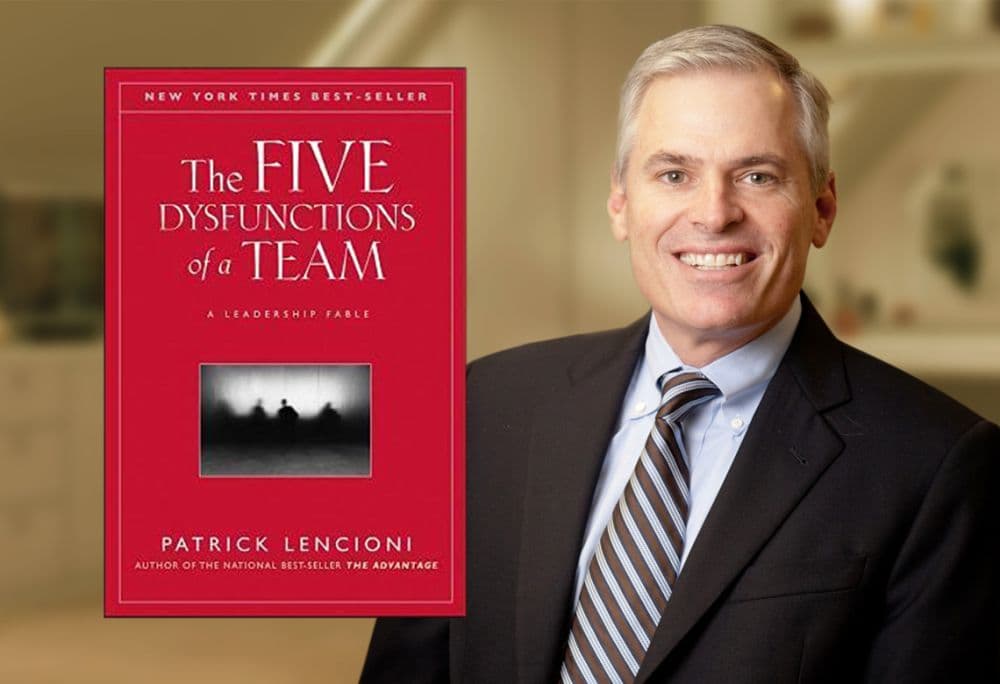
GREAT IDEAS: The Five Dysfunctions of a Team by Patrick Lencioni {Interview}
Book a Patrick Lencioni live virtual event in 2025
Jump to sectionDysfunction number one: Lack of TrustDysfunction Number Two: Fear of ConflictDysfunction number three: Lack of CommitmentDysfunction number four: Avoidance of accountabilityDysfunction number five: Inattention to results
Leadership
Strategy
If your team's mediocre, or falling apart, or not kicking goals.....you have, my friend, a dysfunctional team.
Dysfunctional teams are the polar opposite of what you need right now.
With a complex, volatile, and uncertain future, you need smooth-running teams with impact players and Level 5 leaders working towards a common goal.
So, let's look key concepts behind his book 'The Five Dysfunctions of a Team' and what simple steps leaders and teams can make to improve team dynamics:
Dysfunction number one: Lack of Trust
Teams can be destroyed if members are not capable of being vulnerable with each other.
- It's only in building trust that we give our teams a fighting chance.
- We have to know each other and be comfortable being real with each other. That's the foundation of true performance-based teamwork
- Simple 10 minute exercise: Have each team member share: This is where I grew up. Here's how many kids were in the family, and where I was in the order, and this was the most challenging thing about my childhood
- Personality testing tools go a long way to helping teams understand one another. Some people like to keep their options open, others like closure. Some think out loud, others think on their own; until you understand that about one another it's really difficult to admit what you're not good at. Pat has developed The 6 Types of Working Genius
- If the leader can't be vulnerable first , if the leader doesn't take that risk, other people won't and shouldn't. The leader has to say, "I will put myself out there and be vulnerable," and 99 times out of a hundred that is honoured, and it works
- It's why a leader is a leader. They have to be selfless more than the people they lead. See What Makes a Good Leader in 2024: The Definitive Guide
Dysfunction Number Two: Fear of Conflict
Trust means that even if you disagree, even if you're frustrated at each other on an intellectual level, it's not going to transfer to interpersonal conflict. You're just trying to find the best answer.
- Mining for conflict. Look below the surface, like you're mining for gold or for coal or something else. You're looking and saying, Okay, there's a disagreement here, but nobody's surfacing it
Dysfunction number three: Lack of Commitment
When there's no conflict, when people don't weigh in, they don't really buy in.
"They sit in a meeting and they nod their heads and go, Okay, well we can do that. And then they go back to their team and they say, I don't think this is a very good idea."
Dysfunction number four: Avoidance of accountability
The primary source of accountability on a team should be peers.
The best teams in the world don't see a problem and tell their manager. Rather, they do something about it themselves. On a really good team up to 99% of the accountability is peer to peer.
Dysfunction number five: Inattention to results
The CEO has to say the results of the company are more important than any of the departments. Otherwise, they'll pay attention to their own results , their department, their budget, their career, their ego.
PATRICK'S GREAT EIGHT, eight getting-to-know you questions
What's a book you'd recommend? Resisting Happiness by Matthew Kelly
If you could co-author a book with anyone, who would it be, and what is the book title? Fiction writer Dean Koontz. He wrote a series of books about a neurodivergent character whose name was Odd Thomas, O-D-D Thomas, so it'd probably be something about him.
What's a great bit of advice you could share? Be humble because it's the ultimate virtue. It's what allows us to build deeper relationships with people.
What's been your lowest moment, and how did you recover? My father passing away (also) eight or nine years ago I hit the wall in my career and in my work and in my life, because I wasn't finding any joy in it anymore, because I think I lost sight of why I was doing it. And so I had to stop everything for two weeks, and really pray and find my purpose, and realise that everything I thought I was working for wasn't real.
How do you relax? That is my biggest challenge. I don't relax. I have four boys, I love them and I love my work and it's all very busy and I love my wife. Relaxing for me is if I can go out and play nine holes of golf with one of my boys, there's really nothing else I can do. So it kind of contains me. I'm terrible at it, but it's fun. So, golfing, which I should probably commit to doing more.
What's a fun fact that's not widely known about you? Oh, oh, here's one. I think this is kind of fun. I have obsessive compulsive disorder and I've had it since I was five years old, which means I did all these little quirky things that most people didn't know about, like counting on things. And every number has a gender and a personality, leading up to 12.
What's the secret of success? Loving what you're doing in that moment. Don't do something because it can make you rich, or because you think its going to lead to something later. Love it in the moment.
What's a prediction for 2025? I think people are going to realise that tech, the promises of technology are vastly overrated.... that it's not satisfying, and in fact it's dangerous. Hopefully they'll realise that they need God to be satisfied.
If you're serious about enhancing your team's performance, we invite you to join the Growth Faculty.
Membership offers access to the world's brilliant thinkers, their tools and resources, and fresh insights to help you build a culture of clarity and execution excellence.
Upcoming Learning
Who's Up Next?We're continually sourcing the world's greatest minds for your business success, so subscribe today for event updates, business ideas, leadership tips and tools for growth.
Related Articles